Best Blinds for Home Offices
What Blinds Are Best for Home Offices?
Home offices need window coverings that support comfortable, focused working throughout the day. The right blinds help manage screen glare, control natural light, maintain privacy during working hours and create a space that feels practical rather than distracting.
While many people search for “home office blinds”, the best solutions depend on how the room is used, where the windows are positioned and how much light control or privacy is needed during the day.
Based on years of manufacturing and installing window coverings in real homes, including dedicated home offices and multi-use rooms, here are the options that consistently work well. Each one has its own strengths and limitations and we’ve included clear guidance on where different Blinds and Shutters perform best in a typical home office.
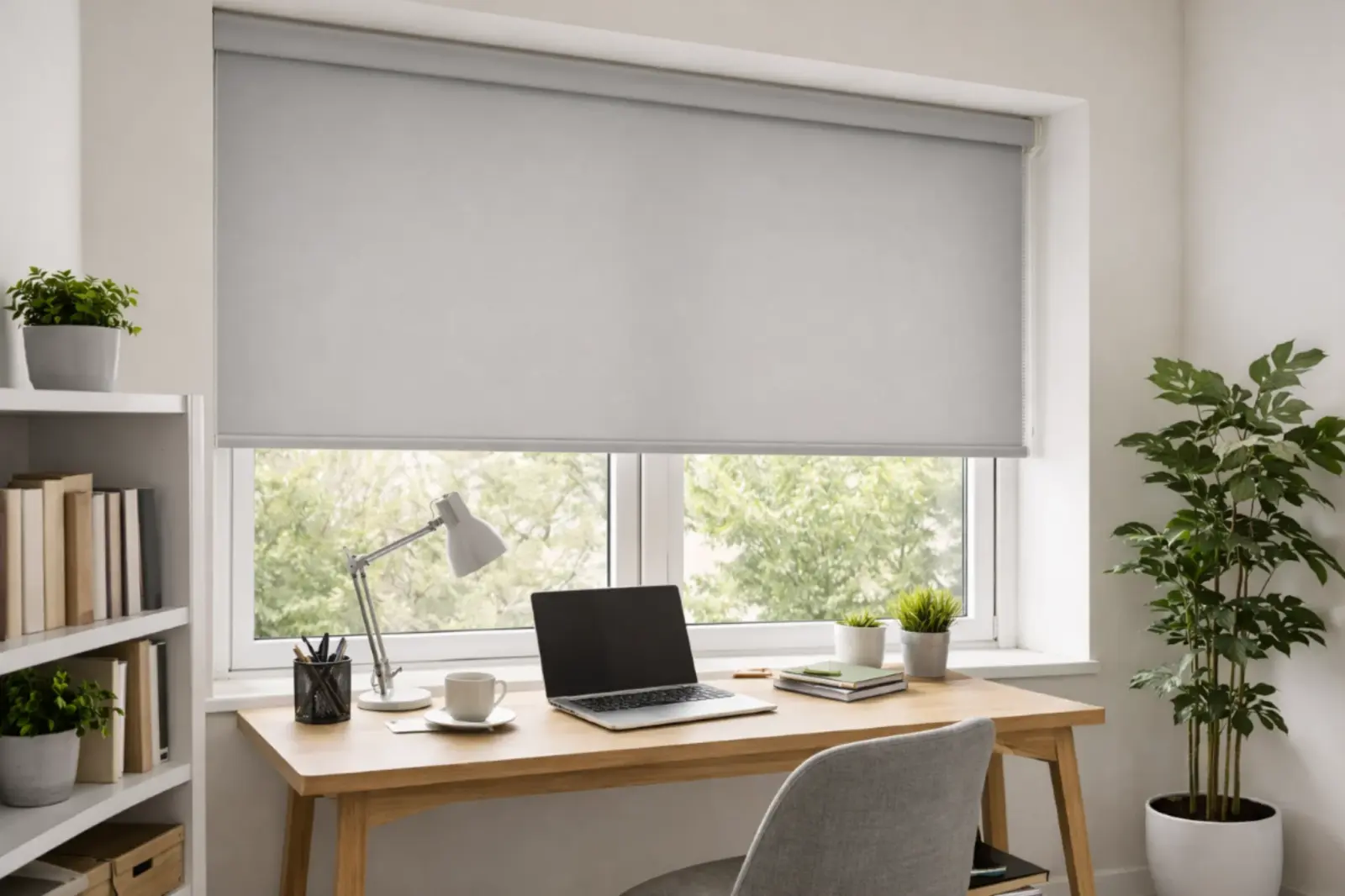
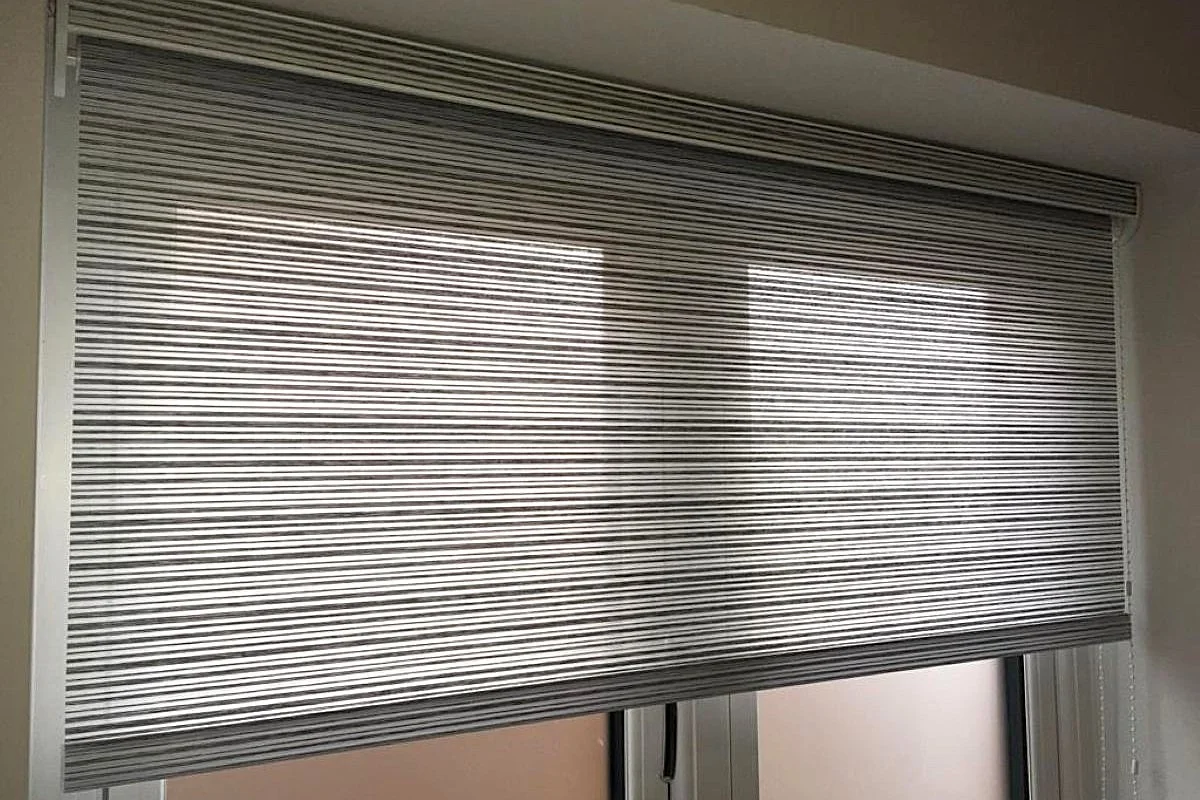
Roller Blinds – Practical Light & Glare Control for Home Offices
Roller blinds are one of the most popular and effective choices for home offices due to their simplicity, versatility and wide range of fabric options. When specified correctly, they help manage daylight, reduce screen glare and maintain privacy without making the room feel dark or closed in.
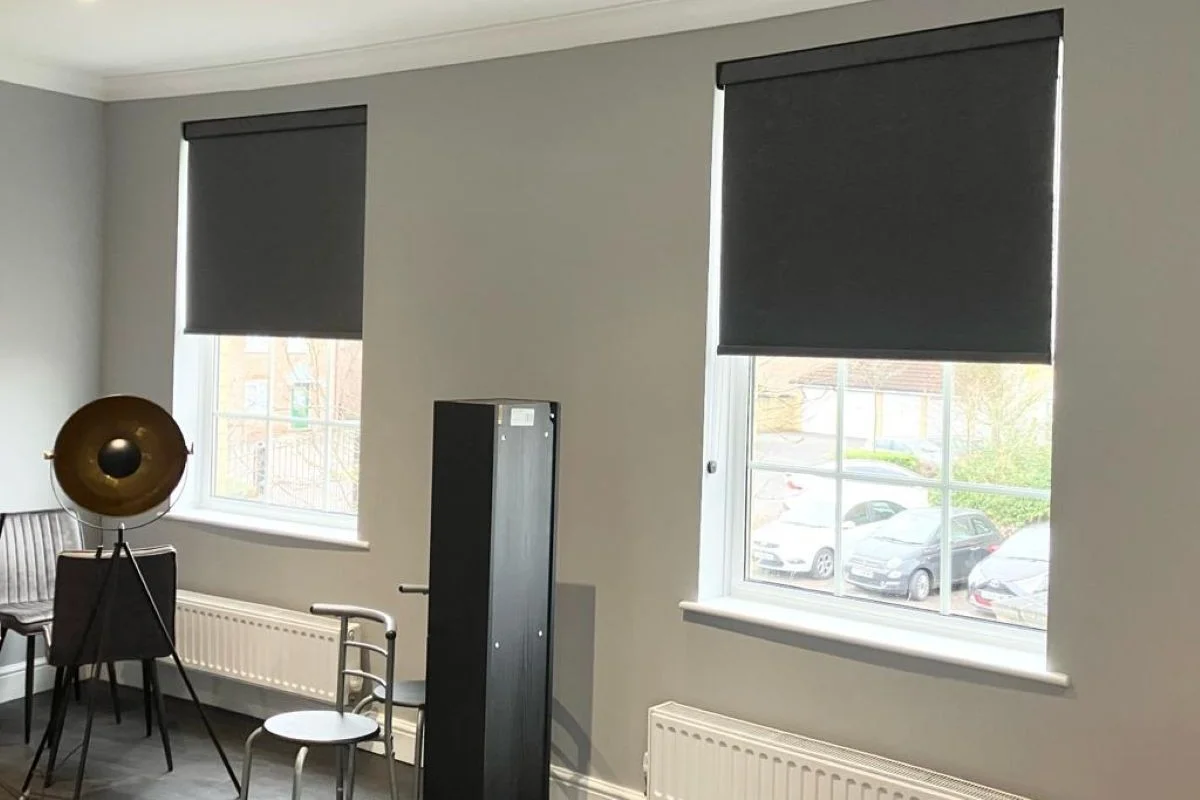
For most home offices, screen fabrics are the preferred option. These fabrics allow natural light to pass through while reducing glare on computer screens, helping create a more comfortable working environment throughout the day. Blackout roller blinds can also be suitable in certain situations, particularly where strong sunlight causes disruption or where the room is used for multiple purposes.
Roller blinds can be fitted inside or outside the window recess and are available as standard rollers or with a cassette system at the top. A cassette helps reduce top light gaps and gives a cleaner, more built-in appearance, which many customers prefer in a working space.
Strengths:
Excellent control of daylight when the correct fabric is chosen
Screen fabrics help reduce glare without darkening the room
Simple, tidy appearance suited to working environments
Wide choice of fabrics, colours and finishes
Optional cassette for a neater, more integrated look
Suitable for most window sizes and layouts
Limitations:
Blackout fabrics are not usually ideal for home offices, as they can make the space feel too dark during the working day unless full light blocking is genuinely needed.
Roller blinds operate in a simple up-or-down motion, which means they don’t offer the same level of fine light adjustment as slatted blinds.
Some light may appear around the edges of the blind, particularly when fitted inside the recess. In a home office, this is rarely an issue unless blackout is required, as screen fabrics are designed to manage glare rather than block light completely.
Screen fabrics prioritise glare reduction over privacy at night.
Not ideal for unusually shaped windows or very shallow recesses.
Venetian Blinds – Precise Light Control for Home Offices
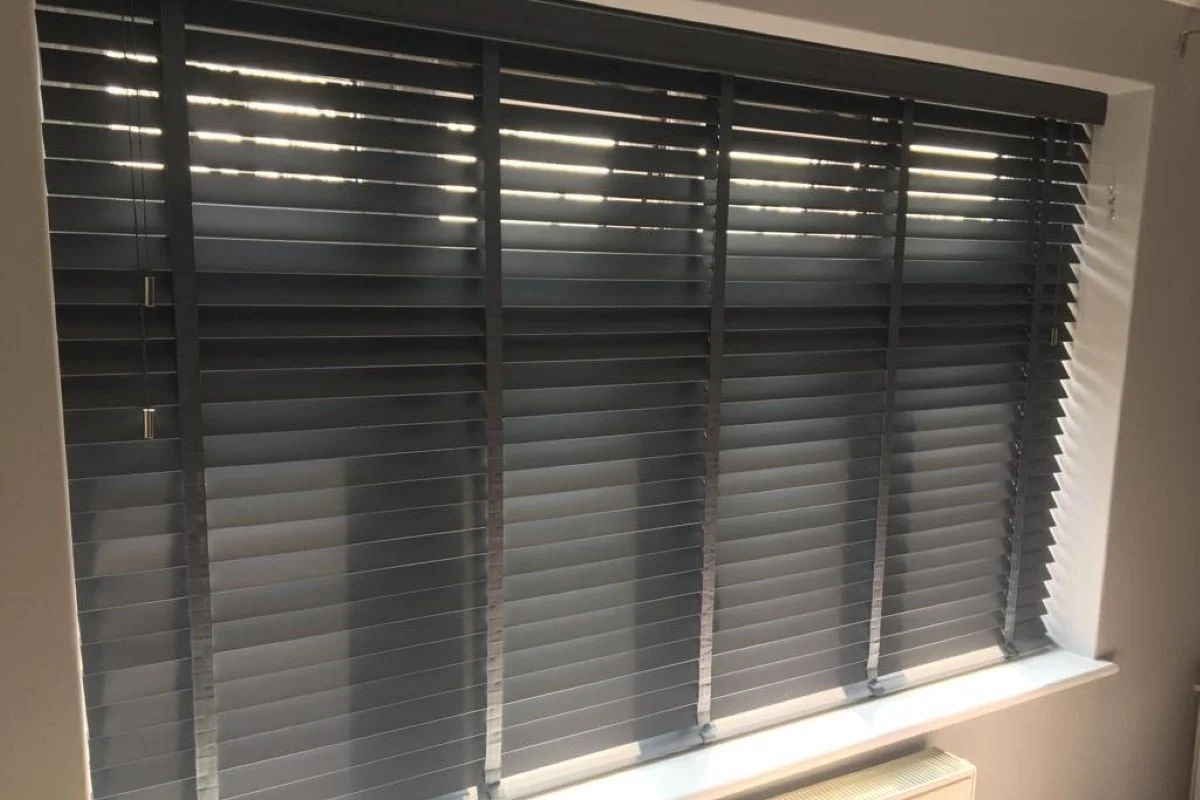
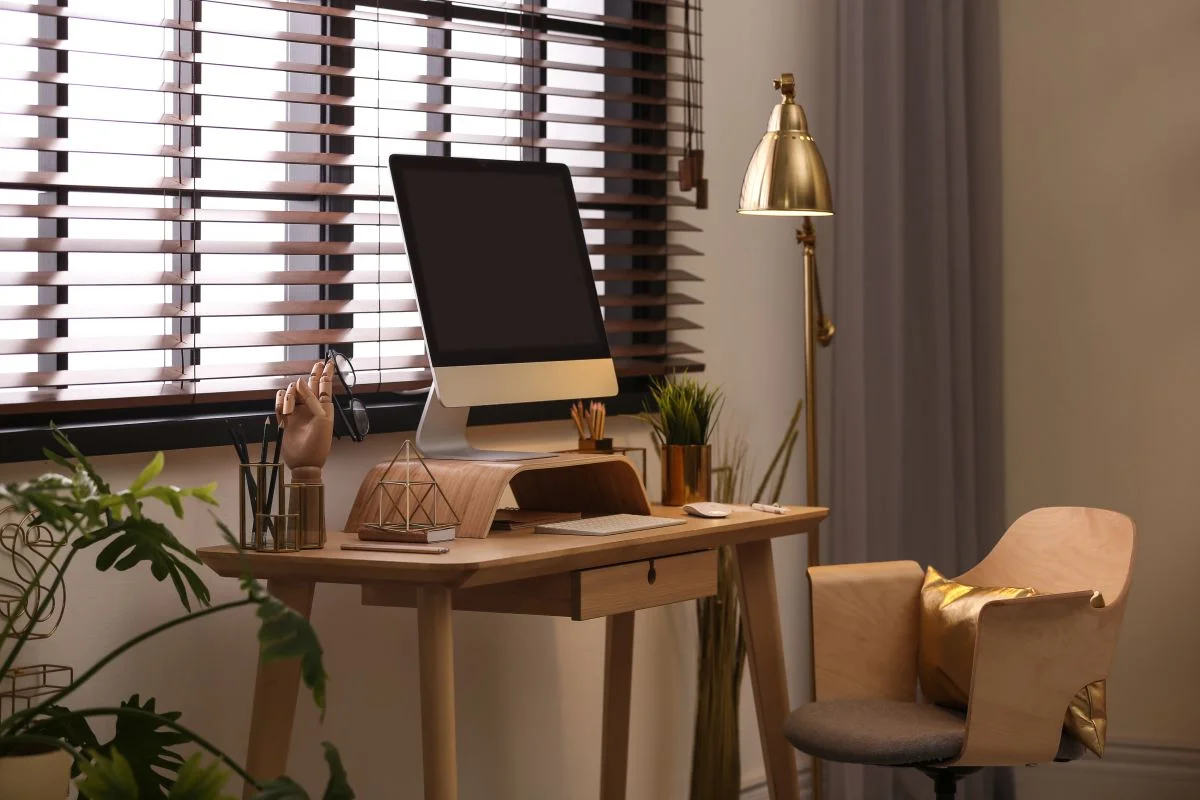
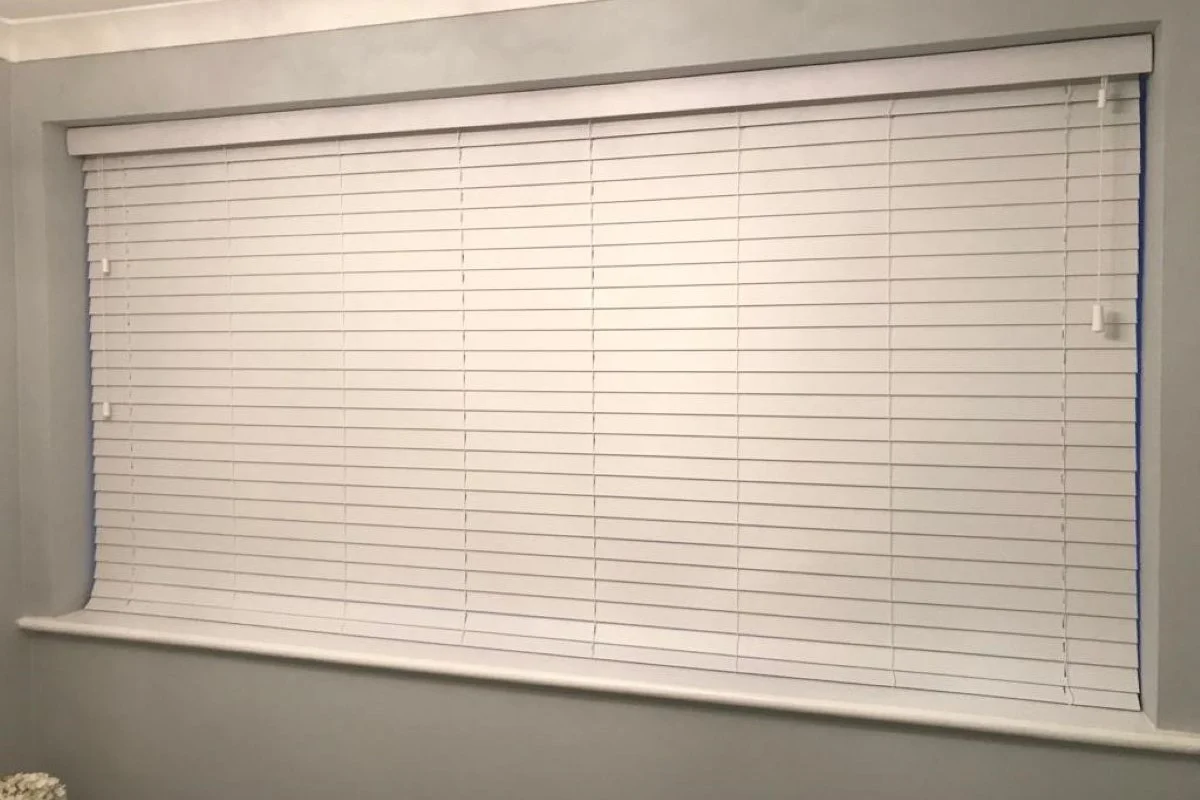
Venetian blinds are a popular choice for home offices where fine control over light and privacy is important. Their adjustable slats allow you to manage daylight throughout the working day, making them particularly useful in rooms where sunlight moves across the window and causes screen glare at different times.
By tilting the slats, Venetian blinds can reduce direct light while still allowing natural daylight into the room. This makes them well suited to desk-based working, video calls and spaces where maintaining a bright but comfortable environment is key.
Venetian blinds are available in a range of materials, including aluminium, faux wood and wood, each offering a slightly different look and feel. Aluminium Venetians are often chosen for their clean, modern appearance, while faux wood and wood options suit more traditional interiors.
Strengths:
Excellent control over light direction and glare
Allows daylight in while maintaining privacy
Slats can be adjusted throughout the day as light conditions change
Suitable for most window sizes and layouts
Available in a wide range of finishes and colours
Limitations:
Not a blackout solution
Slatted design means some light will always pass through
Less effective for full privacy at night when lights are on
Can collect dust more that other types of blinds
Not ideal where complete light exclusion is required
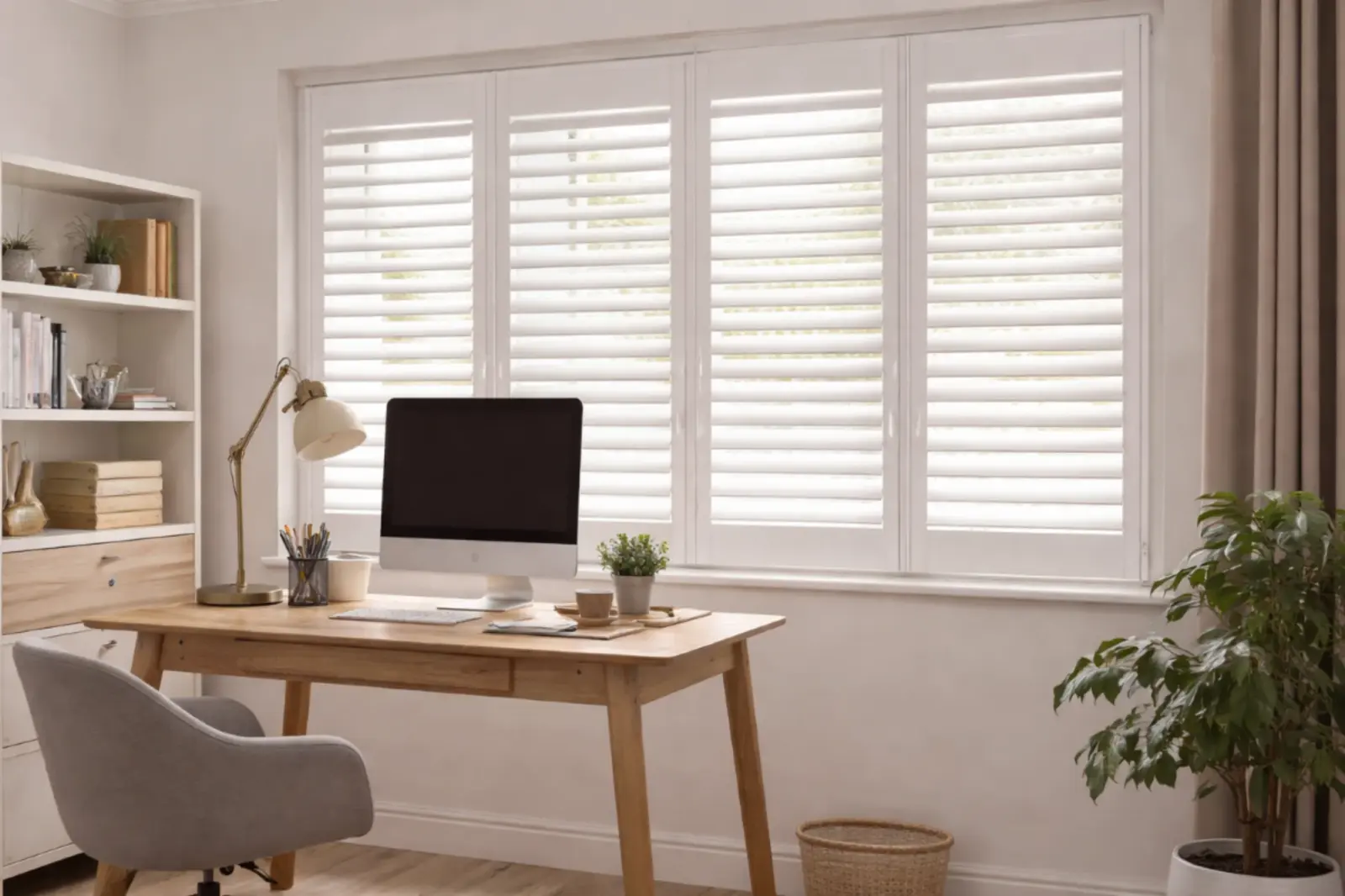
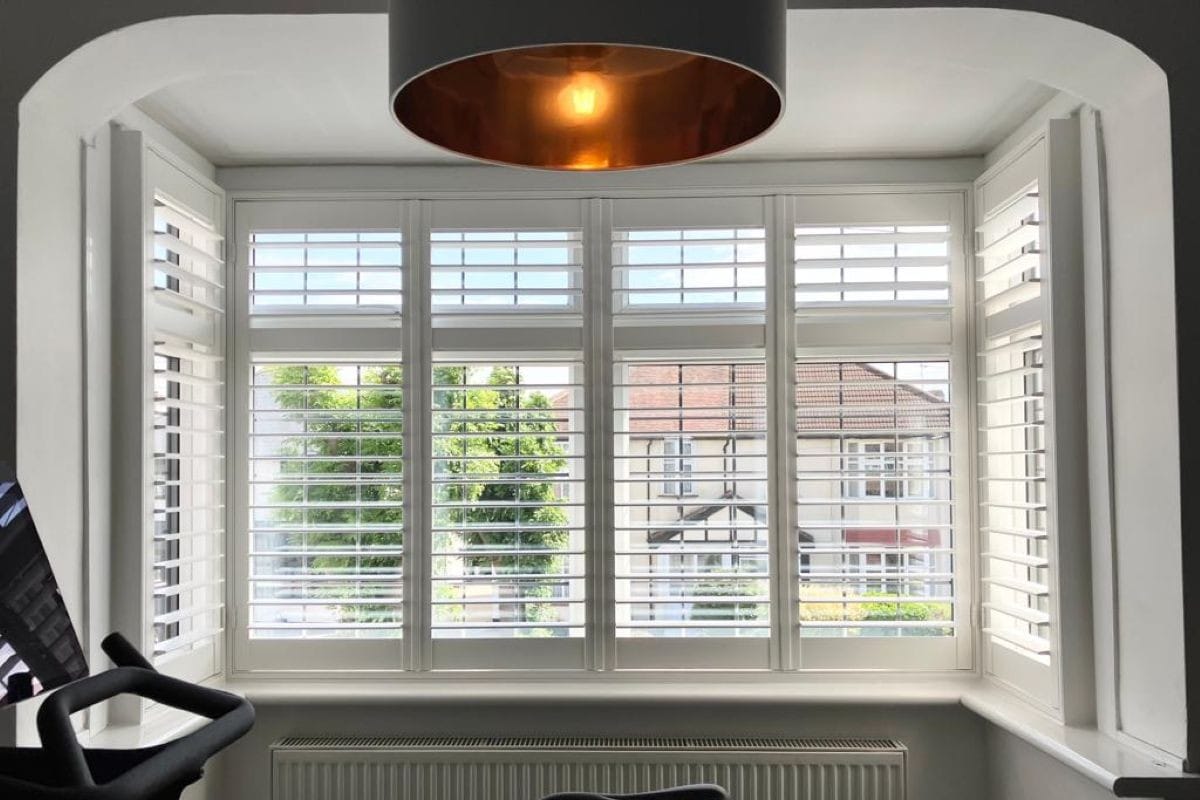
Plantation Shutters – A Structured, Long-Term Solution for Home Offices
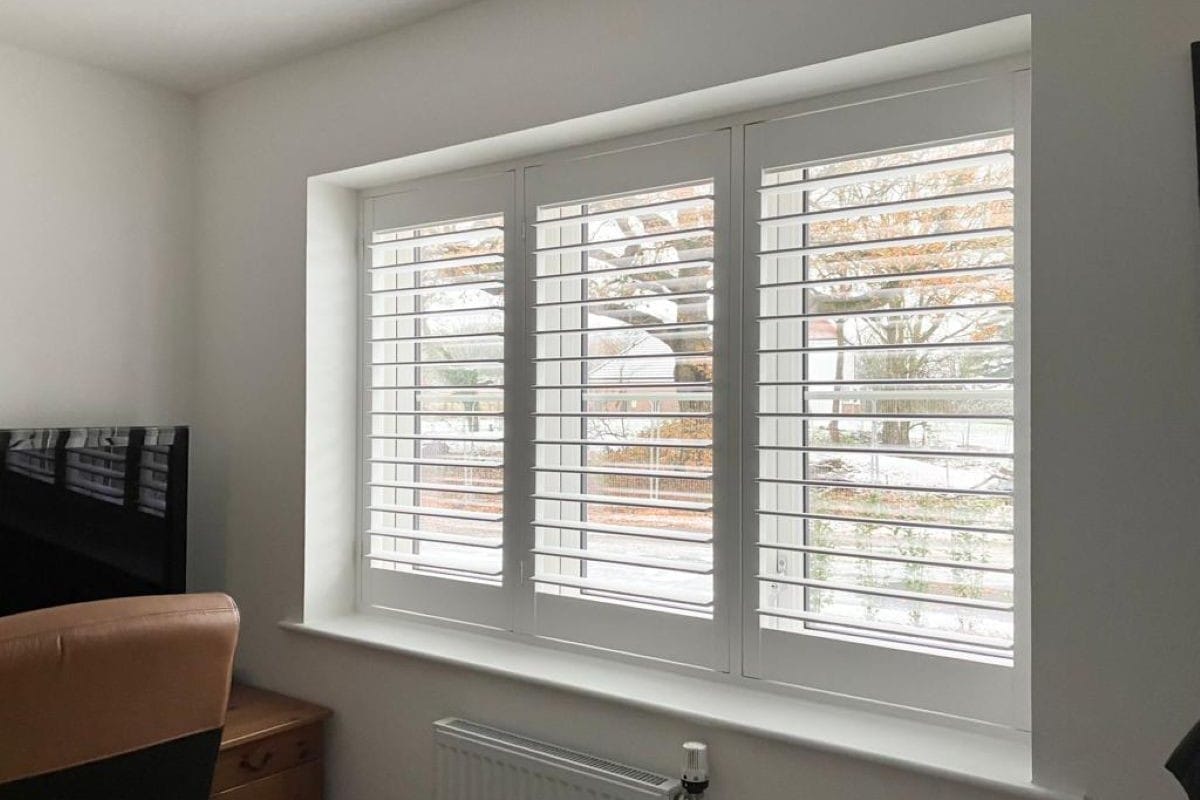
Window Shutters are a more permanent window covering option and are often chosen for home offices where long-term durability, privacy and controlled natural light are priorities. Like Venetian blinds, Shutters use adjustable louvres to manage light direction, but their solid construction gives them a more architectural, built-in feel.
By tilting the louvres, Plantation Shutters allow daylight into the room while helping reduce direct glare on screens. They also provide consistent privacy during working hours, particularly in front-facing or overlooked home offices. Because shutters are fixed in place, they create a tidy, uncluttered look that suits both modern and traditional interiors.
Plantation Shutters are most commonly fitted to full window recesses and are typically made to measure, meaning they become a permanent feature of the room rather than a removable window dressing.
Strengths:
Adjustable louvres allow control of light direction and privacy
Helps reduce glare while maintaining usable daylight
Clean, built-in appearance suited to working spaces
Durable, long-term solution
Provides privacy during the day without fully blocking light
Suitable for a wide range of window styles
Limitations:
Higher initial cost compared to blinds
Permanent fitting means less flexibility if room use changes
Not suitable for all window shapes or shallow recesses
Can reduce the amount of light when fully closed
Perfect Fit Blinds – A Neat, Frame-Mounted Solution for Home Offices
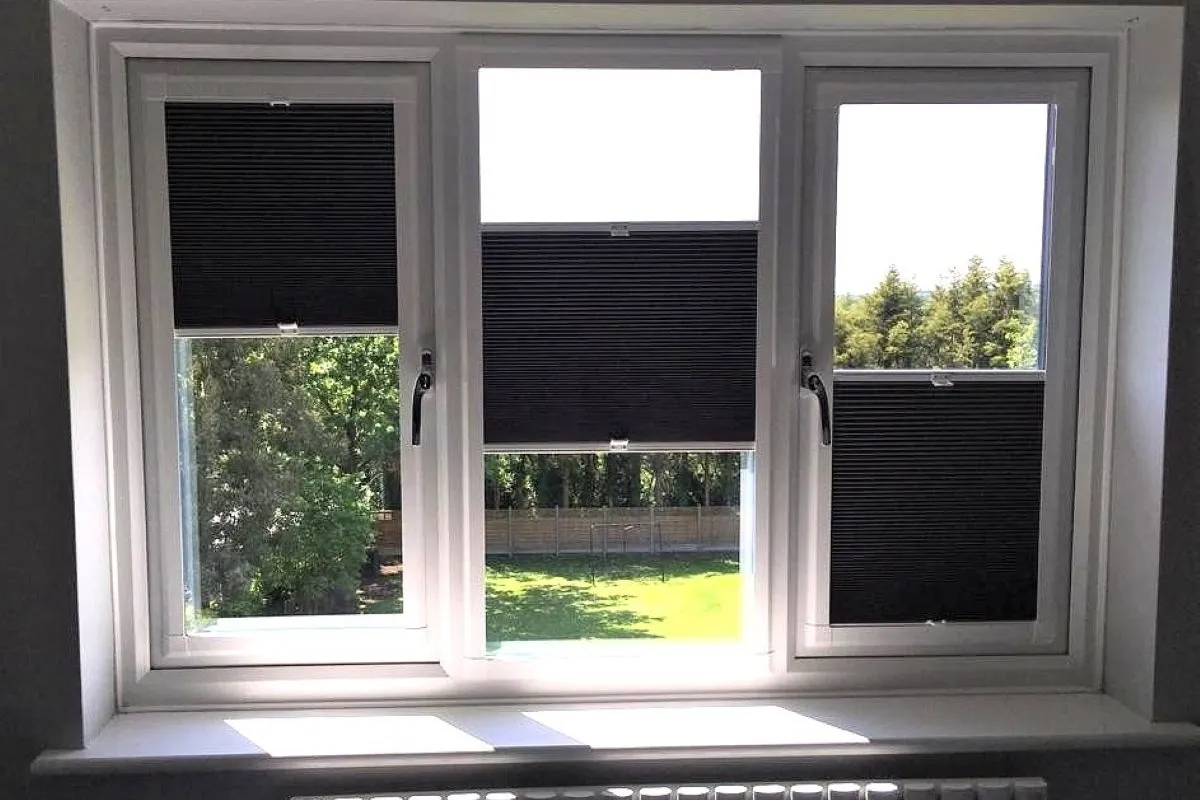
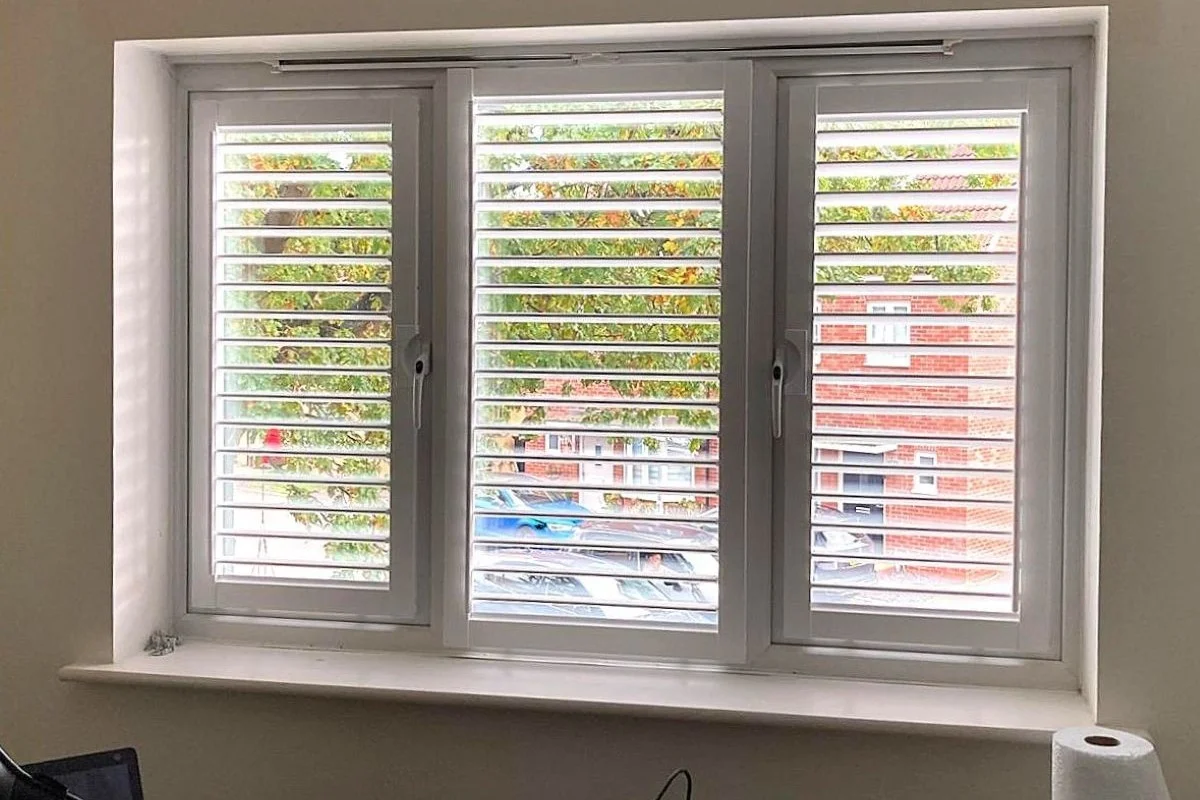
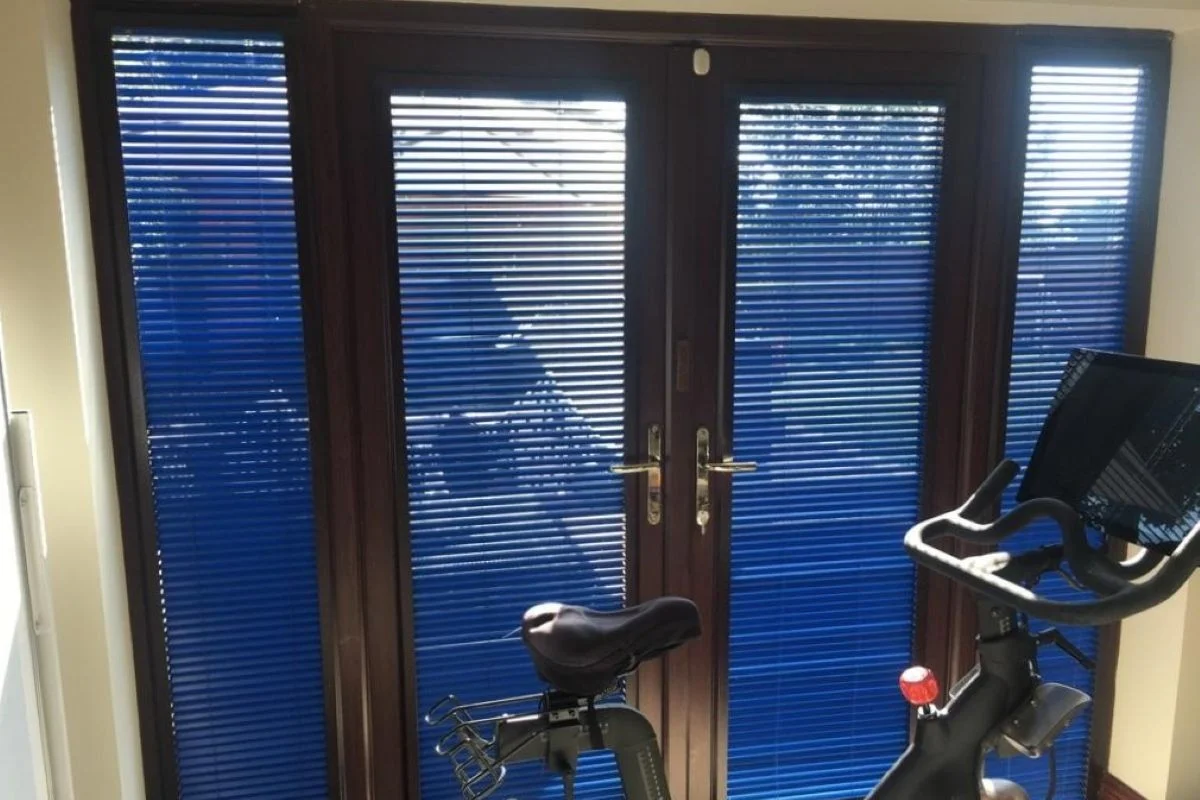
Perfect Fit blinds are designed to clip neatly into the frame of uPVC windows and doors, creating a streamlined, integrated finish. In home offices, they are often chosen where a tidy appearance, ease of use and minimal visual distraction are priorities.
Because Perfect Fit blinds move with the window or door when opened, they work particularly well in spaces with tilt-and-turn windows, inward-opening windows or glazed doors that form part of a home office layout. The blind sits within its own frame, meaning there are no loose cords or hanging fabric, which helps keep the workspace uncluttered.
Perfect Fit blinds come in a range of blind styles, Cellular Blinds, Venetians Blinds, Roller Blinds, Day & Night or Shutter Lite offering a balance between light control and a clean, modern look.
Strengths:
Neat, integrated appearance with no drilling into walls
Moves with the window or door when opened
Helps keep home office spaces visually tidy
Suitable for uPVC windows and doors
Reduces light glare while maintaining a clean finish
No loose cords or chains
Limitations:
Only suitable for specific window types (typically uPVC)
Not a blackout solution in most applications
Less flexible if windows are changed or replaced
Limited suitability for non-standard window shapes
Light control options depend on blind choice
Also worth considering: Day & Night Blinds
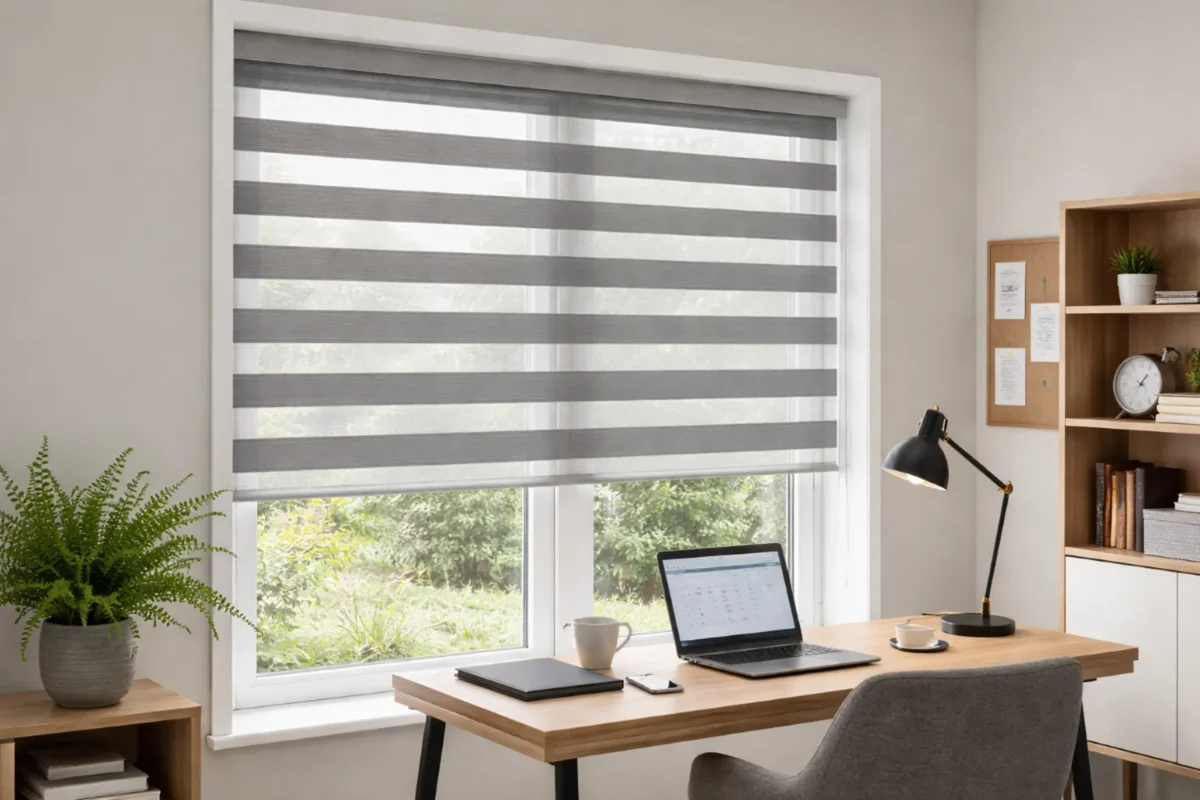
Day & Night blinds are a popular option for home offices where flexible light control is important throughout the day. Their alternating sheer and opaque fabric panels allow you to filter light, reduce glare or increase privacy without fully raising or lowering the blind.
While they don’t offer the same precision as Venetian blinds or the clean finish of Plantation Shutters, they can work well in modern home offices where a balance of daylight and privacy is needed.
Automated Blinds for Home Offices
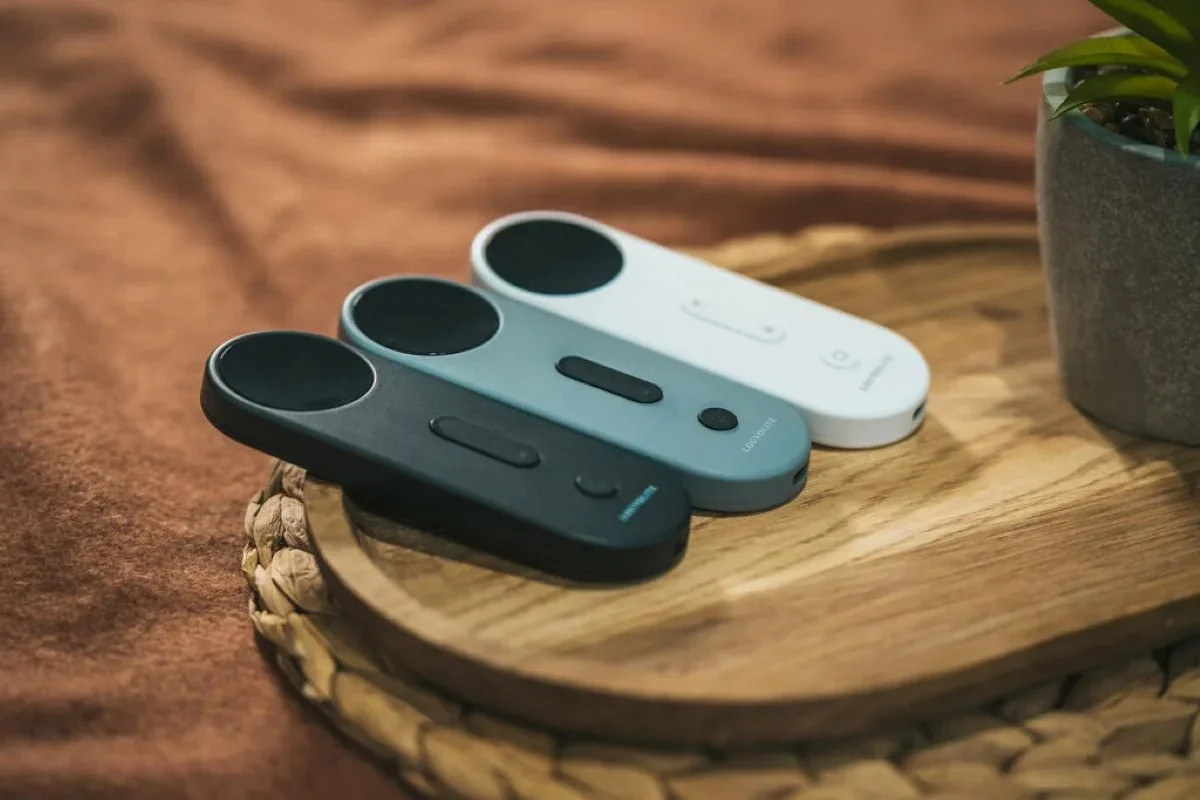
In some home offices, automated blinds can add an extra level of convenience, particularly where windows are hard to reach or where light levels change throughout the day. Automation allows blinds to be adjusted at the touch of a button or on a schedule, helping manage glare and daylight without interrupting your work.
Automation can be applied to several blind types, including Roller blinds, Venetian blinds and some Perfect Fit systems. Whether it’s suitable often depends on how the room is used, the position of the windows and personal working preferences.
FAQs about Home Office Blinds & Shutters
The best blinds for a home office depend on how the room is used and where the windows are positioned. Roller blinds with screen fabric, Venetian blinds and Perfect Fit blinds are popular choices, as they help reduce screen glare while maintaining natural light.
Blinds that allow adjustable light control, such as Venetian blinds or screen roller blinds, help filter daylight rather than block it completely. This reduces glare on computer screens and video calls while keeping the room bright and comfortable for working.
Yes. Plantation shutters are a great option for home offices where privacy, light control and a clean, built-in look are important. The adjustable louvres allow you to control glare on screens while still letting in natural light, making them ideal for front-facing or overlooked rooms.
Venetian blinds, Perfect Fit blinds and certain roller blind fabrics provide daytime privacy while still allowing light into the room. The best option will depend on how overlooked the window is and the direction it faces.
Blackout blinds can be useful in home offices that also function as guest rooms or where full light control is occasionally needed. For most home offices, dimout or screen fabrics offer a better balance between glare control and natural daylight.
Yes. Many blinds suitable for home offices can be motorised, making it easy to adjust light levels throughout the day. Motorised blinds are especially useful for south-facing offices, hard-to-reach windows or where changing light levels affect screen visibility.
Screen fabrics reduce glare and soften daylight during the day, but they do not provide full privacy at night when internal lights are on. For home offices used after dark, we often recommend dimout fabrics, adjustable blinds such as Venetians or shutters, or layering with curtains.
If you have any other questions, please call us on 01268 949255 and our team will be happy to help.
Need Advice on the Best Options for Your Home Office?
Share a few details about your room and how you use it, and our team will offer clear, practical advice tailored to your home office layout, light levels and working needs.