Struggling with Sun Glare on Your TV or Screen?
There’s nothing more frustrating than trying to watch TV or work on a screen, only to be met with reflections and glare from sunlight.
Whether it’s a bright living room, a home office, or a conservatory, natural light can quickly make screens difficult to see – especially at certain times of the day.
For many homeowners, this becomes a daily annoyance rather than an occasional issue.
Why Does Sun Glare Happen?
Sun glare occurs when direct or reflected sunlight hits your screen, making it difficult to see clearly.
Large windows, glass doors and conservatories allow significant amounts of natural light into a space. While this is great for brightness, it also increases the likelihood of glare.
The position of the sun throughout the day can also make the problem worse, particularly in south-facing rooms or spaces with wide glazing.
Does Closing Curtains or Blinds Solve the Problem?
In some cases, yes – but it’s not always the ideal solution.
Closing curtains or blinds can reduce glare, but it often means darkening the entire room, which defeats the purpose of having natural light in the first place.
Many homeowners find themselves constantly adjusting blinds throughout the day or living with a room that feels darker than it needs to be.
Why Glare Is Often Worse Than You Expect
Glare isn’t always caused by direct sunlight alone.
It can also come from:
- Reflections off nearby surfaces
- Light bouncing through multiple windows
- Low-angle sunlight in the morning or evening
This is why even rooms that don’t feel overly bright can still suffer from screen glare.
Ways to Reduce Sun Glare on Screens
Yes – sun glare on TVs and screens can be reduced by controlling how much light enters the room and how it interacts with reflective surfaces.
There are several ways to manage glare without completely blocking out natural light.
Positioning screens away from direct sunlight can help, although this isn’t always practical depending on room layout.
Adjusting blinds or curtains can reduce glare, but often requires ongoing adjustment throughout the day.
A more effective approach is to control the amount of light entering the room, rather than blocking it entirely.
Can Blinds Reduce Glare Without Darkening the Room?
Yes – certain types of blinds are specifically designed to reduce glare without blocking light completely.
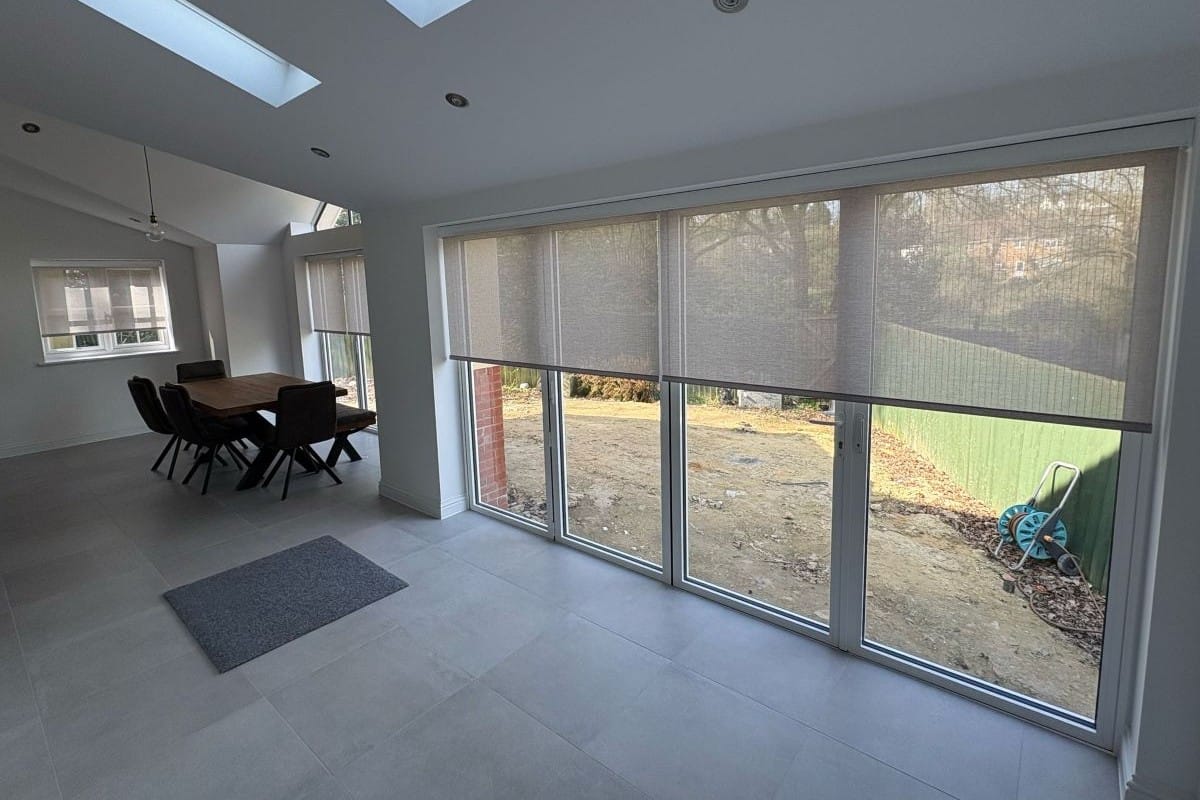
Screen fabric roller blinds are a good example. These use a woven material that filters sunlight rather than stopping it entirely. This means they can reduce glare on screens, maintain natural light within the room, and still allow visibility outside during the day.
Vertical blinds are another practical option, particularly for larger windows and patio doors. By adjusting the angle of the louvres, you can control how much light enters the room, helping to reduce glare without fully darkening the space.
For a softer, more modern look, Allusion blinds offer a similar benefit. Their combination of sheer and opaque fabric panels helps diffuse light while maintaining a view outside, making them well suited to bright living areas.
The level of glare reduction will always depend on the material and how the blind is used, but in most cases, these options provide a more balanced approach to light control.
For many homeowners, this creates a more comfortable balance between brightness and usability.
At night, when interior lights are on, visibility can reverse slightly, so this is something to consider depending on the room.
A More Practical Solution
Managing glare effectively often comes down to controlling light before it enters the room.
Solutions such as solar control window film can reduce glare and brightness while still allowing natural light to pass through.
Because the film is applied directly to the glass, it works consistently throughout the day without the need for adjustment.
Blinds can also play a role, particularly when used to fine-tune light levels at different times.
In many cases, a combination of solutions provides the most comfortable and practical result.
Where Glare Is Most Common in the Home
Sun glare tends to be most noticeable in:
- Living rooms with large windows or bifold doors
- Home offices with screens positioned near windows
- Conservatories with high levels of natural light
In these spaces, managing glare can make a significant difference to comfort and usability.
Final Thoughts
Natural light is an important part of any home – but too much of it in the wrong place can become a problem.
Reducing glare doesn’t have to mean blocking out light completely. With the right approach, it’s possible to maintain a bright space while improving screen visibility and comfort.
Looking to Reduce Glare in Your Home?
If glare is affecting how you use your space, seeing how different solutions work in practice can be helpful.
At John’s Blinds, we offer a range of options designed to improve light control, including blinds and solar control window films.
You’re welcome to visit our Wickford showroom to explore what works best for your space.
For more information, call📞 01268 949255 or email 📧 enquiries@johnsblinds.co.uk
👪From Our Family to Yours – Dressing Windows Since 1975
For over fifty years, we’ve helped homeowners across Essex find practical, well-considered window solutions. With careful measuring and attention to detail, we focus on getting the installation right – because that’s what ensures blinds perform as well as they look.
📲Stay Connected
For more updates, inspiration and upcoming offers, you can follow us on: