No-Drill Blinds: Are They Right for Your Home?
Drilling into window frames isn’t always ideal. Whether you’re trying to protect uPVC windows, avoid damaging new doors, or simply want a cleaner installation, no-drill blinds have become an increasingly popular option.
But are they the right solution for every home?
No-drill blinds secure into place without screws or permanent fixings, offering a tidy installation that protects window frames and surrounding surfaces.
However, like any window dressing, suitability depends on the type of window, the room it’s in and the level of light or insulation you’re looking for.
For that reason, it’s worth understanding how different no-drill systems work and where each performs best.
In this guide, we’ll explain how no-drill blinds work, where they perform best and whether options such as Perfect Fit and Cosiflor systems could be right for your home.
The Evolution of No-Drill Blinds
In the past, most blinds required drilling directly into walls or window frames. While this worked well for many installations, it wasn’t always suitable for uPVC windows, conservatories or rental properties.
As window design evolved, so did blind systems.
Manufacturers began developing clip-in systems that sat flush within the glazing bead, creating a more integrated appearance while protecting the frame from damage.
Over time, this led to refined options such as Perfect Fit and Cosiflor systems – both of which offer a secure, streamlined finish without the need for drilling.
Today, no-drill blinds are not simply a temporary fix. In many cases, they provide a purpose-designed solution for modern windows and doors.
What Are No-Drill Blinds?
No-drill blinds are window coverings designed to fit securely without screws or permanent fixings. Instead of being drilled into the wall or frame, they attach using specialist brackets, clips or frame systems that hold the blind firmly in place.
Most modern no-drill systems are designed specifically for uPVC windows and doors. They sit neatly within the window frame, often clipping into the glazing bead to create a flush, integrated appearance.
As a result, they provide a tidy finish while protecting the window frame from damage. For many homeowners, this makes them particularly appealing for newer properties, conservatories and bi-fold doors.
However, not all no-drill systems are the same. Some are designed for standard windows, while others are better suited to doors or larger glazed areas. Understanding the differences between systems such as Perfect Fit, Cosiflor and Grip Fit helps ensure the right choice for your home.
How Do No-Drill Blind Systems Work?
Although all no-drill blinds avoid screws, the way they attach can vary depending on the system.
Most designs use discreet clips or brackets that sit within the window frame. These fittings hold the blind securely in place without damaging the surrounding structure. Because the blind moves with the door or window when opened, they are particularly suited to glazed doors and modern uPVC frames.
Here’s how the main systems differ:
Perfect Fit Blinds
Perfect Fit blinds are designed to sit neatly within a slim frame that clips directly into the glazing bead of uPVC windows and doors. Once installed, the blind becomes part of the window itself, with no visible drilling or external brackets.
Because the blind moves with the window or door, it works especially well on conservatories, French doors and tilt-and-turn windows. The clean, integrated finish is one of the reasons it has become such a popular choice in modern homes.
There are also several different styles available within the Perfect Fit system. These include roller blinds, Venetian blinds, cellular blinds, day and night blinds, and even Shutter Lite options. This variety allows homeowners to choose a look and level of light control that suits the room, while still benefiting from a no-drill installation.
Since the blind sits flush within the frame, it helps create a tidy, streamlined appearance and can reduce light gaps around the edges. For many properties with uPVC windows and doors, Perfect Fit provides a practical, purpose-designed solution without altering the frame itself.
Cosiflor No-Drill Blinds
Cosiflor blinds are pleated systems designed to sit neatly within the window or door frame without the need for drilling. Unlike framed systems, Cosiflor typically uses discreet brackets or tensioned side cords to hold the blind securely in place.
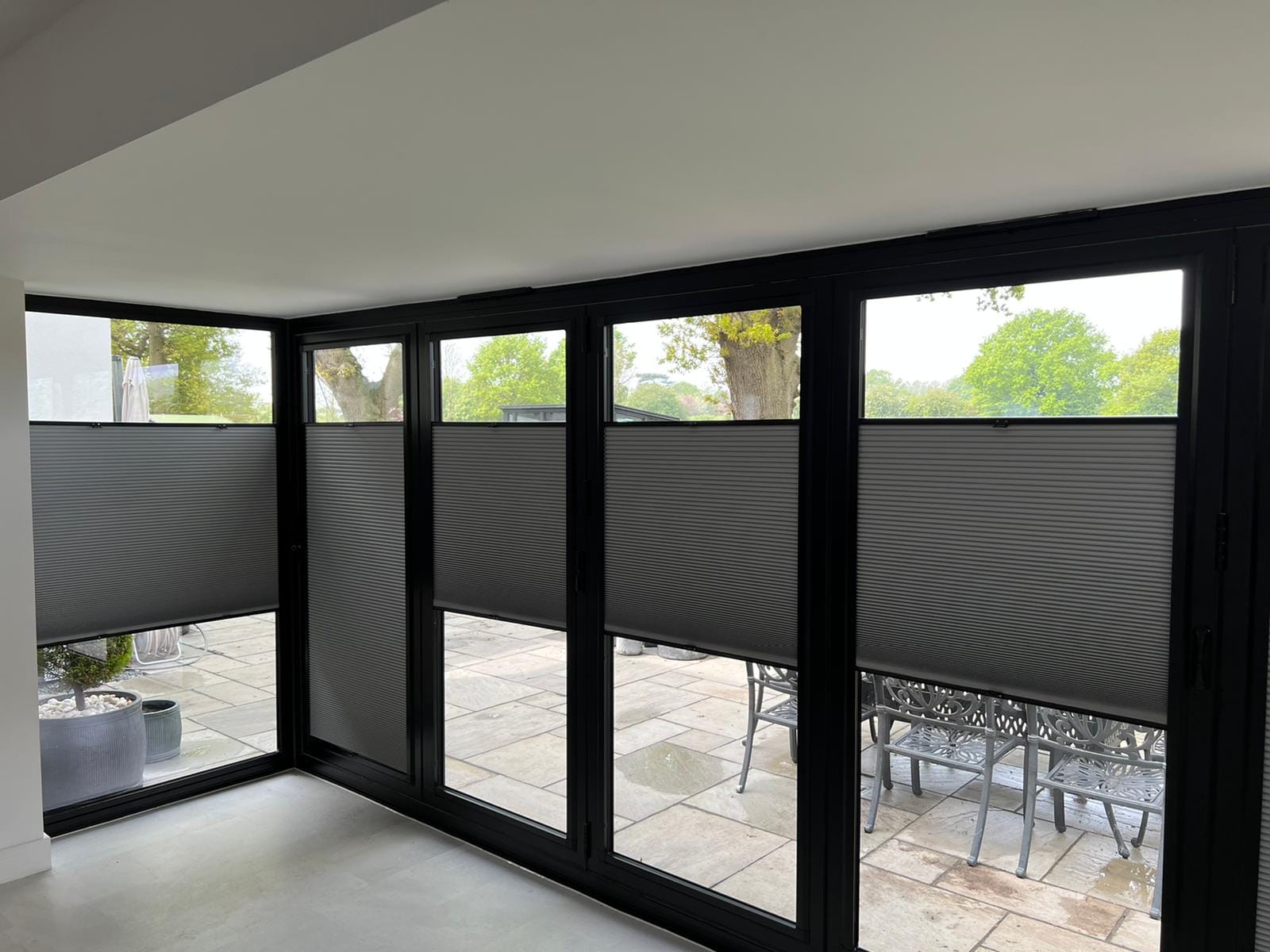
This makes them particularly well suited to bifold doors, patio doors and larger glazed panels where a slim, unobtrusive finish is preferred. Because the blind sits close to the glass and moves with the door, it remains stable when doors are opened or closed.
One of the defining features of Cosiflor blinds is their flexibility. Many systems offer top-down and bottom-up operation, allowing you to control privacy and light more precisely throughout the day.
For homeowners looking for a minimal, contemporary no-drill solution – especially for glazed doors – Cosiflor can be a practical and versatile option.
Grip Fit No-Drill Blinds
Grip Fit blinds are typically cassette-style roller blinds that sit within the window recess and secure in place using controlled pressure on both sides. Instead of drilling into the wall or frame, the system pushes outward to grip firmly against the recess.
Because the blind relies on pressure for stability, it works best on solid, rigid surfaces. Tiled recesses – particularly in bathrooms – are often ideal. Porcelain tiles, in particular, provide a strong, smooth surface that allows the blind to sit securely without any drilling.
However, Grip Fit systems are not usually suitable for plasterboard recesses. Since plasterboard can compress or flex under pressure, it may not provide the necessary support for a secure installation.
When used in the right setting, Grip Fit offers a clean, practical solution for areas where drilling into tiles or hard surfaces isn’t desirable.
Where Do No-Drill Blinds Work Best?
No-drill blinds are not a one-size-fits-all solution. Their suitability depends largely on the window type, the surrounding surface and how the room is used.
Here’s where they tend to perform particularly well:
uPVC Windows and Doors
Modern uPVC windows and glazed doors are often ideal for no-drill systems. Because many of these blinds are designed to clip into the glazing bead or sit neatly within the frame, they avoid damaging the window structure.
Perfect Fit blinds, for example, are especially well suited to this type of installation. Since the blind moves with the window or door, it remains stable when opened and closed. This makes it a practical option for tilt-and-turn windows, French doors and conservatories.
For homeowners who prefer to preserve their frames, no-drill solutions offer a tidy and secure alternative to traditional screw-fixed blinds.
Bifold and Patio Doors
Large glazed areas such as bifold doors present a different challenge. Standard blinds can swing or move when doors open, which may affect both appearance and operation.
Cosiflor systems are often chosen in these situations because they sit close to the glass and move with the door panel. Their slim profile and flexible operation can make them particularly suited to contemporary spaces with large expanses of glazing.
As a result, they provide light control and privacy without interfering with door movement.
Bathrooms and Fully Tiled Recesses
In bathrooms, drilling into tiles is rarely desirable. Porcelain tiles, in particular, can crack if handled incorrectly, and many homeowners prefer to avoid permanent fixings in these areas.
Grip Fit blinds can be a practical solution in tiled recesses because they rely on controlled pressure rather than screws. When fitted against solid surfaces such as porcelain or ceramic tiles, they provide a secure installation without damaging the finish.
However, because the system uses pressure to hold the blind in place, it is not typically suitable for plasterboard recesses. In softer materials, the required stability may not be achieved.
Conservatories
Conservatories often feature multiple glazed panels and uPVC frames. Traditional drilled brackets can interrupt the clean lines of the structure.
Frame-fit systems such as Perfect Fit work well in these settings because they integrate neatly within each individual window panel. This can help maintain a streamlined appearance while offering improved light control throughout the space.
Choosing the Right Setting
Ultimately, the best no-drill system depends on the construction of your windows and doors. A solution that works perfectly on uPVC frames may not be suitable for tiled recesses, and vice versa.
By considering the surface type, window style and room function, you can narrow down the most appropriate option.
What Are the Benefits of No-Drill Blinds?
No-drill blinds have grown in popularity for several practical reasons. While they may not suit every setting, they offer clear advantages in the right environment.
Preserving Window Frames: One of the main benefits is that they avoid permanent fixings. Because they clip or grip into place, there’s no need to drill into uPVC frames, tiles or glazing beads. This is particularly important in newer or recently renovated properties where maintaining the finish matters.
A Cleaner, Integrated Appearance: Many no-drill systems are designed to sit neatly within the frame. As a result, they can create a more streamlined look compared to externally mounted brackets. Frame-fit systems such as Perfect Fit often appear as though they were part of the original window design, which can suit modern interiors especially well.
Stability on Doors: When blinds are fixed directly to walls or recesses, they can sometimes move or swing as doors open and close. Because many no-drill systems attach to the window or door panel itself, the blind moves with it. This can make them particularly practical for French doors, bifold doors and tilt-and-turn windows.
Suitable for Certain Rental or Temporary Situations: In some cases, no-drill blinds may appeal to homeowners who prefer not to make permanent alterations. However, suitability still depends on the surface type and installation method. While some systems are ideal for uPVC frames or tiled recesses, others may not be appropriate for softer materials such as plasterboard.
Tailored Solutions for Modern Glazing: As window and door designs have evolved, so have blind systems. No-drill options often complement modern glazing layouts, especially where large glass areas require discreet and secure light control. When chosen carefully, they offer a balance between practicality and appearance.
Are There Any Limitations to Consider?
While no-drill blinds offer clear advantages, they are not suitable for every window or surface.
Surface Type Matters: Some systems rely on secure clips within the glazing bead, while others use controlled pressure against the recess. Because of this, the surrounding material plays an important role. For example, pressure-fit systems such as Grip Fit generally require solid surfaces like tiled or uPVC recesses. Softer materials, including plasterboard, may not provide enough resistance for a stable installation.
Not Always Suitable for Timber Frames: Many no-drill systems are designed specifically for uPVC windows and doors. Traditional timber frames or older sash windows may not accommodate frame-fit designs in the same way. In these situations, a conventional blind with discreet fixings may offer a more appropriate solution.
Size and Weight Considerations: Larger windows or very heavy fabrics may not always suit every no-drill system. Although many designs are engineered to be secure, extremely wide spans sometimes require alternative fixing methods to ensure long-term stability.
Style Preferences: Some homeowners prefer the look of externally mounted blinds that sit outside the recess. Since many no-drill systems are designed to sit within the frame, the finished appearance may feel more integrated and minimal. Ultimately, personal preference and room design play a part in the final decision.
Advantages and Drawbacks at a Glance
No-drill blinds offer:
✔ Damage-free installation
✔ An integrated, streamlined appearance
✔ Stability on doors
✔ Suitable solutions for uPVC windows and tiled recesses
However, they may not suit:
✘ Plasterboard recesses (in pressure-fit systems)
✘ Certain timber or older window frames
✘ Very wide or heavy installations
Understanding both the strengths and limitations helps ensure the final result performs as expected.
Making the Right Choice
Because every window and surface is different, assessing both the material and the style before choosing a no-drill system is important.
In many modern homes, these blinds provide a practical and well-designed solution. However, factors such as glazing bead depth, recess strength and door movement can influence which system will perform best.
For this reason, having the windows measured and assessed properly can help ensure the chosen blind is both secure and suited to the space. A professional survey can identify potential limitations early and recommend the most appropriate option.
By taking these details into account, the final result is more likely to feel stable, balanced and visually integrated.
Final Thoughts
No-drill blinds have evolved into practical, purpose-designed systems that suit many modern windows and doors. Whether it’s a frame-fit solution for uPVC, a pleated system for bifold doors, or a pressure-fit blind for tiled recesses, each option serves a specific purpose.
When chosen carefully, they offer a secure installation without altering frames or surfaces. However, suitability always depends on the window type, surrounding material and overall room design.
By understanding how each system works – and where it performs best – you can make an informed decision that balances appearance, practicality and long-term stability.
Thinking About No-Drill Blinds?
If you’re considering no-drill blinds and would like practical guidance on what may suit your windows, it can help to have the space assessed properly.
At John’s Blinds, we manufacture and supply a range of no-drill solutions, including Perfect Fit, Cosiflor and Grip Fit systems. By measuring carefully and considering the surface and window style, we aim to recommend options that feel secure, appropriate and well-balanced for the space.
📞 01268 949255 | 📧 enquiries@johnsblinds.co.uk
👪From Our Family to Yours – Dressing Windows Since 1975
For over fifty years, we’ve helped homeowners across Essex find practical, well-considered window solutions. With careful measuring and attention to detail, we focus on getting the installation right – because that’s what ensures blinds perform as well as they look.
📲Stay Connected
For more updates, inspiration and upcoming offers: