Thermal Blinds Explained : How They Can Help Improve Comfort And Reduce Heat Loss
As the evenings get darker and temperatures drop, you may notice that some rooms feel chilly, even when the heating is on.
If you’re looking for ways to make your home more comfortable, you may have come across thermal blinds.
But what makes a blind “thermal,” and how do you know which option is right for your home?
Understanding how different blinds work, and what affects their performance, will help you choose window coverings that suit both your windows and your everyday needs.
What Are Thermal Blinds?
The term “thermal blinds” describes blinds designed to help reduce heat transfer through windows.
It doesn’t refer to one particular style.
Instead, different blinds use insulating fabrics, linings, specialist coatings, or cellular construction to improve thermal performance.
Cellular blinds are a useful example.
Their honeycomb-shaped pockets trap air within the fabric, creating an insulating layer at the window.
However, not all blinds described as thermal perform in the same way.
The construction, fabric and fitting method all deserve consideration.
How Do Thermal Blinds Help Reduce Heat Loss?
During colder weather, heat moves from the warmer interior of your home towards the colder outdoors.
When closed, an insulating blind adds another layer at the window that can help slow this process.
In cellular blinds, air is trapped within the honeycomb pockets and between the blind and the glass.
This helps reduce heat loss and can improve comfort near the window.
Thermal blinds do not generate heat or replace your heating system.
They work alongside your glazing, insulation, and draught-proofing as part of making your home more comfortable.
Which Types Of Blinds Can Offer Thermal Benefits?
Choosing a thermal blind involves considering both its insulating properties and how you want it to look and function.
Cellular Blinds
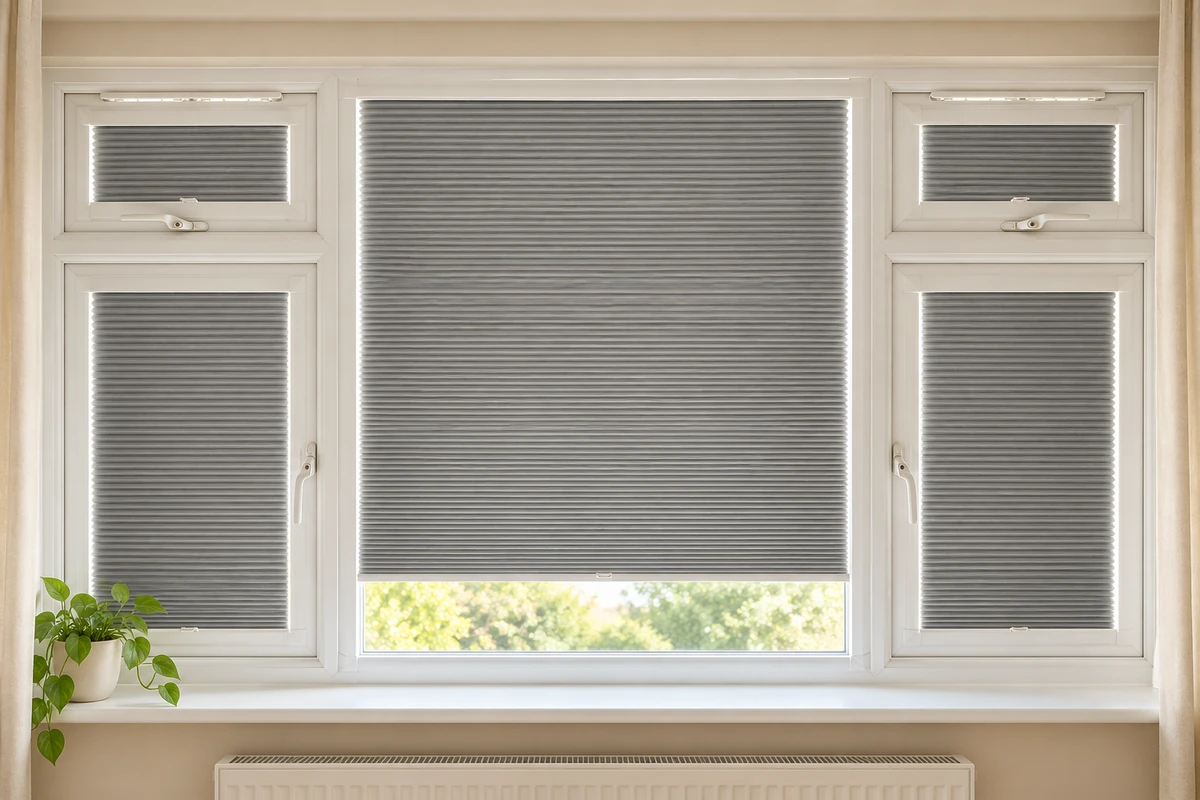
Cellular blinds, also known as honeycomb blinds, combine insulating pockets with a neat, pleated appearance.
Different systems suit different windows and doors.
For example, Perfect Fit Cellular Blinds can suit compatible uPVC frames, Cosiflor systems offer options for bi-fold doors and specialist glazing, and Maxi Cell is designed for larger glazed areas.
Selected fabrics can also be coordinated across systems, helping you achieve a consistent look while choosing a suitable blind for each window.
Roman Blinds With Thermal Lining
Roman blinds offer a softer, decorative finish, with fabric that folds neatly when raised.
A suitable thermal lining adds an insulating layer behind the face fabric.
As with made-to-measure curtains, the lining should be chosen around your priorities.
Discussing warmth, privacy and light control together will help you find the most suitable combination.
Roller Blinds With Suitable Thermal Fabrics
Some roller blind fabrics use specialist backings or coatings designed to improve thermal performance.
However, a standard roller blind should not automatically be treated as an insulating blind.
Ask about the properties of the specific fabric and how the complete system will fit your window, rather than choosing on colour or thickness alone.
Does The Fit Of Your Blind Make A Difference?
Yes. Even a suitable insulating fabric needs a carefully considered fit.
The amount of glass covered and the gaps around the blind can affect its performance.
Research into cellular blinds highlights the importance of a well-fitted system.
Made-to-measure blinds allow the size and fitting position to be planned around your windows, but appropriate clearance is still needed for smooth operation.
Handles, opening sections and the depth of the recess can all influence which system is practical.
The aim is to choose a blind that provides suitable coverage while allowing you to use your windows and doors comfortably.
Necessary ventilation should remain unobstructed.
Are Thermal Blinds Also Blackout?
Not necessarily.
“Thermal” describes insulating properties, while “blackout” describes light blocking through the fabric.
Some products offer both, but one feature does not automatically guarantee the other.
For bedrooms, Night Shade Cellular Blinds combine honeycomb insulation with enhanced room darkening.
Light-filtering cellular fabrics offer another option where you want softer daylight.
It’s also important to distinguish blackout fabric from a completely dark room.
Depending on the system and installation, some light may still enter around the edges.
Which Rooms Could Benefit From Thermal Blinds?
Start by thinking about where you notice discomfort and what else you need from the blind.
You might consider them for:
- Living rooms where seating is close to cold windows
- Bedrooms that feel chilly in the evenings
- Home offices where you spend extended periods beside glazing
- Rooms with large windows or glazed doors
For a bedroom, darkness and privacy may be priorities alongside warmth. In a home office, managing daylight and glare may matter more.
For doors used throughout the day, consider whether the blind will move with the door or need to be raised before opening it.
The right choice should make the room easier to use as well as more comfortable.
How Can You Get The Most From Thermal Blinds?
Insulating blinds provide their benefit when they cover the window, so everyday use matters.
During colder weather, closing them as daylight fades is a practical routine.
On sunny winter days, opening them can allow useful daylight and warmth into the room.
Choose controls you will find convenient.
Manual operation may suit easily accessible windows, while motorisation can be helpful for larger or harder-to-reach blinds.
Compatible systems may also offer timers.
If you notice draughts through damaged seals or gaps in the frame, those issues should be addressed too.
A blind cannot repair a draughty window.
Will Thermal Blinds Reduce Your Energy Bills?
Reducing heat loss can help lower the energy needed to maintain a comfortable temperature.
However, there is no fixed saving that applies to every home.
The result depends on your existing windows, the chosen blind, its fit, your heating habits and how regularly you use it.
Research findings relate to specific products and conditions, rather than a guaranteed saving for every property.
Rather than choosing solely on a headline saving, look for information relevant to the particular product and your installation.
Conclusion
Thermal blinds can help improve comfort, but the right choice depends on more than the thermal label.
Consider how the blind provides insulation, how it will fit and the light control you need.
Choosing around these practical details will help you find a window covering that supports a more comfortable home and works well in everyday use.
Need Help Choosing The Right Blinds?
If you’re considering thermal blinds and aren’t sure which option would suit your home, we’d be delighted to help.
Visit our Wickford Showroom to compare fabrics and operating systems and discuss what you would like your blinds to achieve.
We can also arrange a free home consultation to assess your windows and explain suitable options to help you make an informed choice for your rooms.
📞 01268 949255 |📧 enquiries@johnsblinds.co.uk
👪From Our Family to Yours – Dressing Windows Since 1975
For over fifty years, we’ve helped homeowners across Essex choose blinds, curtains, shutters and shading solutions with confidence.
Combining traditional service with modern products and manufacturing expertise, we continue to focus on quality, safety and customer care.
📲Stay Connected
For more updates, inspiration and upcoming offers, you can follow us on: